Roguelike Deckbuilder Deck Consistency: Reliable Draws
5 min read
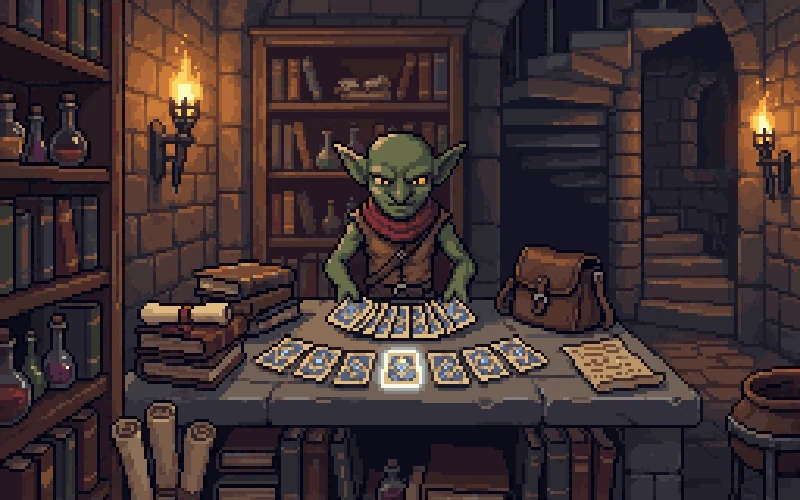
Roguelike deckbuilder deck consistency is the chance that your deck can produce a useful turn when you need one. A small deck can help, but consistency also depends on whether you can access key effects, whether your cards work in different combinations, and how often a draw leaves you with awkward choices.
What roguelike deckbuilder deck consistency means
Think of consistency as reliable access to a useful plan, rather than a promise to draw one particular card. A deck may be small and still feel erratic if most of its power depends on a single rare card. Another deck may be larger but function smoothly because several cards cover similar needs.
It helps to define what a useful turn means for the situation ahead. Against a hard-hitting enemy, you might need enough defense to avoid taking a dangerous amount of damage. Before a boss, you may want to set up a lasting effect or build toward a stronger later turn. A card that is excellent in one situation can be a poor draw in another, so consistency is always about the deck and the challenge together.
A practical check is to imagine drawing an ordinary hand from your current deck. Can you make a reasonable play if your favorite card is missing? If the answer is often no, the problem may be dependence on a single effect, a shortage of cards that work together, or too many cards that need a specific partner.
Find the cards your deck depends on too heavily
Start by naming the jobs your deck needs to do. These might include dealing damage, preventing damage, setting up a combination, or helping you see more cards. Then ask which single card you are counting on for each job. If one card is the only answer to a recurring problem, drawing it becomes a bottleneck.
This does not mean every card needs a duplicate. Some effects are powerful enough to justify being unusual, and a deck can have a clear centerpiece. The key question is what happens when that card is at the bottom of the draw pile, or when it arrives at a moment when you cannot use it well. A second route to the same result can keep the run functional while you wait.
Use a simple mental test after a difficult fight. What did you hope to draw? What did you actually have? If the gap keeps pointing to the same missing job, you have a more useful diagnosis than 'my deck needs more power.' This kind of review is one of the most practical deck consistency tips because it links a frustrating turn to a specific change.
Use overlapping roles to make more turns work
Overlapping roles are cards that can contribute to the same broad plan in different ways. Perhaps one card helps you defend while preparing a later attack, while another improves your attack directly. They do not need to be interchangeable. They only need to give you more than one workable path through a turn.
Look for cards that remain useful across several draw combinations. A card that is fine on its own and better with a partner can be more dependable than a card that is powerful only when paired with one exact setup. This is especially important when combinations require multiple pieces. Each additional requirement makes the full sequence less likely to appear together.
When considering a combo, separate its essential pieces from its supporting pieces. If a particular card is required for the combo to function, ask how the deck performs before you draw it. If the combo is only a bonus, the rest of the deck can focus on sound individual turns. For a fuller framework for evaluating card interactions, see how to build synergies in roguelike deckbuilders.
Balance card draw against deck size
A smaller deck usually cycles through its cards more often, which can make key effects easier to reach. But cutting cards is only helpful when the remaining cards still cover the tasks your run demands. If thinning removes an important kind of answer, you may draw your remaining cards more often and still have poor turns.
Card draw can improve access, but it has a cost in the form of the cards and resources spent to get it. Ask what the draw card does when you have already drawn well. If it still contributes to the turn, it is easier to justify. If it only helps when your hand is already stuck, it may be a situational fix rather than a reliable part of the plan.
Deck size also changes how you think about repeated effects. Adding a strong card can make the deck better on the turn it appears, while making a particular existing card slightly less likely to appear early. That trade can be worthwhile. The important point is to judge the whole draw pattern, including the value of the new card, rather than treating every addition as either good or bad.
If you are new to these decisions, roguelike deckbuilder tips for beginners covers fundamentals such as deck thinning, synergy, and risk management.
Check whether a new card improves average turns
Before adding a card, consider three ordinary situations: a hand with no combo pieces, a hand with one piece, and a hand where several pieces arrive together. Does the card help in the first two situations, or does it only shine in the third? A strong best-case turn can be memorable, but consistent decks also need a decent floor when the draw is less cooperative.
Consider the cost of the card in context. A useful effect can still compete with other cards for the same limited resources, or take up a draw without offering an immediate play. Think about what you might have to leave unused when this card appears. If the answer is often 'nothing useful,' the card may create more clumsy turns than it solves.
The goal is not to make every hand identical. Random draws are part of the genre, and a flexible deck gives you ways to respond to that uncertainty. When deciding how to make a deck consistent, favor cards that improve several plausible hands, patch a real weakness, or give a second route to an important job. Skip a tempting addition when its value depends on a narrow setup you rarely reach.
A useful final check is to describe the job of each card in one short phrase. If many cards do the same job while another essential job has only one answer, the deck may be uneven. If a card has no clear role and does not support a plan, it may be adding noise. These checks make deck changes easier to reason about, even when a run's next draw remains uncertain.
Tower Trials is a dark-fantasy roguelike deckbuilder and card RPG for mobile, with five archetypes: Miner, Tinker, Brewer, Runes, and Wall. It is free to play, with one optional purchase to remove ads. Learn about Tower Trials.
Play Tower Trials today on mobile