Roguelike Deckbuilder Elite Fights: When to Risk One
6 min read
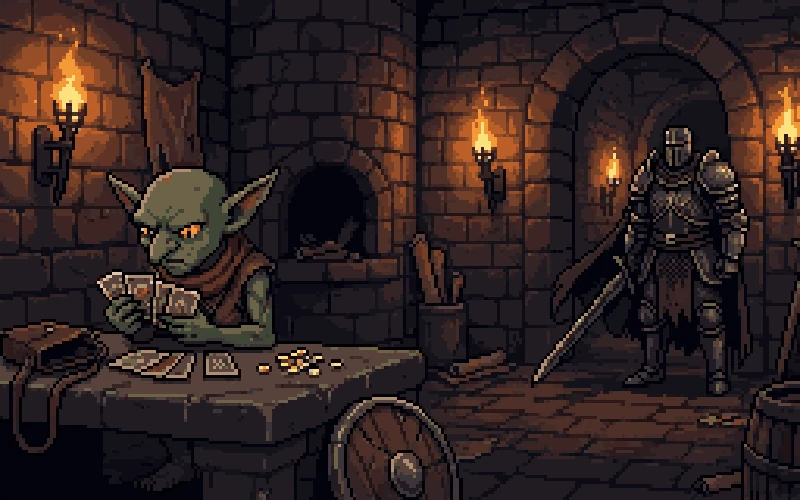
Roguelike deckbuilder elite fights can look tempting when the route offers a valuable reward, but current health alone says little about whether your deck is ready. A better decision comes from checking the fight's demands, the answers your deck can draw, and what you can afford to spend afterward.
What makes an elite fight different
An elite is usually a sharper test than a regular encounter. It may deal more damage, apply pressure more quickly, or ask your deck to handle a threat that ordinary enemies rarely present. The exact challenge depends on the game, so avoid treating the word "elite" as a single fixed difficulty level.
The important difference is often how much room the fight gives you to recover from a weak opening. A regular enemy may let you spend a few turns assembling a plan. An elite might punish that delay. Before choosing the route, ask what the encounter could demand: rapid damage, defense over several turns, answers to a particular status, or the ability to handle multiple threats at once.
Rewards matter, too, but their value depends on when they arrive and what your run needs. A powerful reward can improve future fights, while a costly elite can leave you too depleted to reach the next rest or boss. Think about the next stretch of the map as part of the same decision. An elite is a route choice with consequences beyond its own room.
- What kind of pressure does this encounter create?
- What could the reward improve in my current deck?
- How much recovery or support is available after the fight?
Check your deck's answers, not just its damage
A deck with a high damage ceiling can still be poorly suited to a particular elite. Look at the cards you can draw consistently, rather than the single strongest turn you can imagine. If your plan needs several pieces to arrive in sequence, ask whether you have enough ways to stay safe while assembling them.
Check whether your deck has a practical answer to common problems. Can it block or reduce incoming damage across several turns? Can it remove a dangerous enemy before that enemy overwhelms you? Does it have a way to cope if the fight adds a status or disrupts your usual rhythm? These questions are more useful than asking whether your deck is simply "strong."
Consistency matters because the opening hand is part of the risk. A deck with one excellent defensive card may still struggle if that card is buried, while several modest answers can make a plan more dependable. The same applies to damage. A reliable stream of useful plays can be safer than a combo that takes time to assemble.
If you are unsure how the pieces in your deck support each other, it can help to review a general framework for building roguelike deckbuilder synergies. The goal is to identify what your deck can do repeatedly, then compare that to what the elite may ask of it.
- Count repeatable answers, not only peak damage.
- Look for a plan against sustained pressure and disruptive effects.
- Notice whether your core sequence needs several turns to come together.
Use health and consumables as part of the decision
Health is a resource, but the number on its own does not tell you how much risk you can take. A high total can disappear quickly if your deck has no way to blunt incoming attacks. A lower total may be workable when your deck can defend efficiently and the path ahead offers recovery. Consider your likely health after the fight, too, rather than treating victory as the finish line.
Consumables can change the calculation. If a potion or similar item can answer the fight's biggest threat, carrying it may make an elite more manageable. But spending a rare resource has an opportunity cost. Ask whether using it now could leave you exposed to a later encounter that is harder for your deck to answer.
A useful way to prepare is to set a rough stopping point before entering. For example, decide which resource you are willing to spend, and what kind of damage would make continuing the route unsafe. The exact threshold varies by game and by run. Making the call in advance can keep one promising reward from persuading you to ignore a worsening situation.
For broader fundamentals around planning and risk, the beginner tips guide covers concepts that apply across many run-based deckbuilders. Use those ideas alongside the specific rules of the game you are playing.
- Estimate your condition after the fight, not only before it.
- Decide whether a consumable addresses a real weakness in this matchup.
- Account for what comes next on the route.
Choose a safer route when the deck has a gap
Skipping an elite can be the sensible choice when your deck has a clear weakness and the path offers a useful alternative. Perhaps your damage arrives too slowly, your defense depends on one card, or the encounter may test a status your deck cannot handle. A safer fight can give you another chance to improve before taking that risk.
There is no universal rule that says an elite should always be avoided early or always pursued for its reward. The right call depends on the map, the current deck, and the game's reward structure. Compare the available paths in concrete terms. Which route preserves enough health? Which one offers a chance to fix the gap? Which route leaves you with the fewest dangerous unknowns?
A choice can still be reasonable even when it carries risk. If your deck has a solid answer to the expected threat and the reward addresses a key need, taking the elite may be worth it. The point of a checklist is not to remove uncertainty. It is to make sure the risk is attached to a plan rather than a vague hope.
- Name the deck's weakest matchup before choosing a route.
- Compare the elite reward with the safer path's likely benefit.
- Prefer a route that gives you a way to address a known gap.
Learn from a loss without overcorrecting
After losing to an elite, try to identify the moment the plan stopped working. Did the fight deal too much damage before your deck got moving? Did you draw several cards that were useful later but weak in the opening? Did you spend a consumable too early, or hold it until it no longer mattered? One clear cause is more useful than a broad verdict like "my deck was bad."
Then separate a deck problem from a decision problem. A deck may have lacked a needed answer, or the route may have asked too much of it at that point. Those suggest different adjustments. You might look for a way to improve consistency, or you might take a safer path when the same matchup appears again.
Avoid making a sweeping correction from one fight. Adding every defensive card you see can leave a deck short on damage, while chasing more damage may preserve the original weakness. Treat the result as information about a specific matchup. Next time, adjust the part of the plan that failed and keep the parts that were working.
- Describe the failure in terms of turns, draws, or resources.
- Decide whether the gap came from the deck or the route choice.
- Change one relevant part of the plan instead of rebuilding around one loss.
Tower Trials is a free dark-fantasy roguelike deckbuilder featuring five archetypes: Miner, Tinker, Brewer, Runes, and Wall. It has one optional purchase that removes ads, and you can learn more on the Tower Trials homepage.
Play Tower Trials today on mobile