Solo Dev Roguelike Game Development: Five Archetypes
3 min read
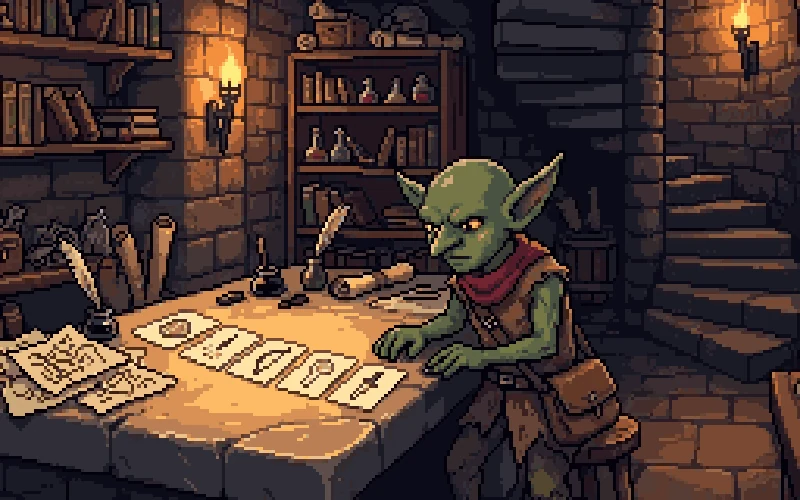
Solo dev roguelike game development asks you to solve two problems at once: make each path feel distinct, then keep the whole system small enough to understand and maintain. When you're making a roguelike alone, a useful starting point is to treat archetypes as promises to the player, and test whether each one keeps that promise across a run.
Solo dev roguelike game development starts with scope
An archetype is more than a label or a pile of themed cards. It suggests a way to make decisions. A player choosing a defensive path might expect to manage incoming damage; one choosing a combo path might expect to assemble pieces that reward planning. If two paths lead to the same decisions, they may not need to be separate.
There is no magic number of archetypes that suits every roguelike. Each one adds content and testing work. New cards need to be evaluated in isolation and in combinations, while shared systems need to behave consistently across all paths. Three tightly defined options can offer more meaningful choice than ten that blur together.
Before adding a path, write down its decision-making identity in one sentence. Then list the kinds of choices it should create during a fight, during a reward selection, and when a run is going badly. If those answers overlap heavily with an existing path, sharpen the difference before making more content.
- What decision does this path ask players to make often?
- What does it do well, and what does it leave difficult?
- What kind of card or reward would clearly belong here?
Making a roguelike alone means keeping the boundaries clear
A common trap in solo dev card game work is dividing concepts by theme while leaving their play patterns almost identical. A poison-themed card and a shield-themed card may look different, yet both can amount to 'gain value now and wait.' Give each path a mechanical boundary as well as a visual one.
A boundary can be simple. One path might focus on handling a threat immediately, while another gains value by planning several turns ahead. The exact rules depend on the game. The useful test is whether a player can describe what they are trying to do without listing card names.
Try a small design exercise before expanding a path. Write three example rewards for it, then write three rewards that would feel misplaced. If every idea seems to fit, the identity may be too broad. If almost nothing fits, it may be too narrow to support a satisfying set of choices.
- Describe the path using verbs, such as block, cycle, store, or convert.
- Name one tempting effect that should belong elsewhere.
- Check whether its weakness creates decisions rather than frustration.
Make defense create decisions
Defense can become passive if its only payoff is taking less damage. That makes the turn feel solved as soon as the player has enough protection. A more engaging defensive plan gives protection a cost, a timing question, or a way to influence what happens next.
For instance, a design could ask whether to spend a defensive resource now or preserve it for a larger threat. Another could reward a player for defending efficiently, while still leaving room to choose between protection and progress. These are general patterns, not requirements. The right one depends on the length of a fight and how much information the player has.
A quick evaluation question helps: after choosing a defensive action, does the player still have a meaningful decision? If the answer is usually no, consider adding a tradeoff or changing how the action fits into the turn. The goal is to make defense feel active without making every defensive choice secretly a damage combo.
Tower Trials is a dark-fantasy roguelike deckbuilder for iOS and Android, with five archetypes: Miner, Tinker, Brewer, Runes, and Wall. It's free to play, with one optional purchase to remove ads; learn about the game.
Play Tower Trials today on mobile