How to Choose Relics in Deckbuilders
7 min read
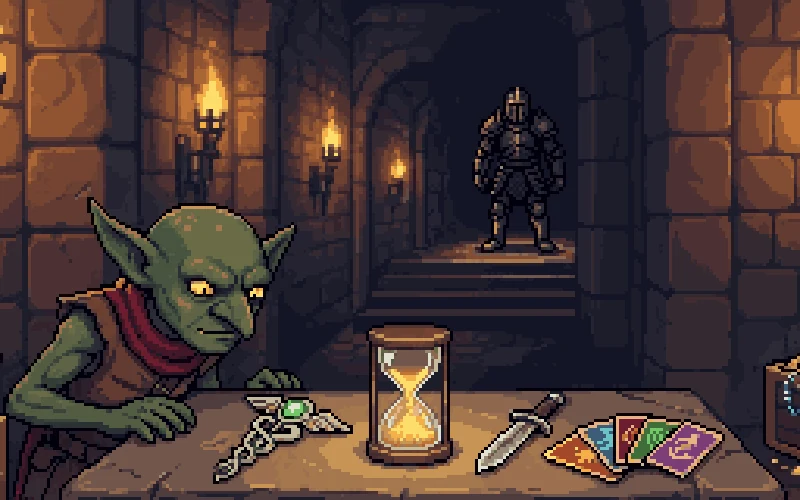
How to choose relics in deckbuilders comes down to a useful question: what problem will this relic solve in the run you have right now? A flashy effect can be less valuable than a modest one that improves your ordinary turns, shores up a weakness, or makes a planned route safer. Here's a way to judge the options without treating rarity as a ranking.
What relics usually change during a run
Relics are persistent effects that shape more than one card play. Depending on the game, a relic might improve a repeated action, reward a particular kind of card, help with a resource, or change how you approach fights. Since its effect can show up across many turns, its value often depends on how frequently your deck can make use of it.
That means the same relic can be excellent in one run and marginal in another. An effect that triggers when you play a certain kind of card gains value when your deck reliably draws and plays those cards. If you have only one copy of the relevant card, the relic may contribute much less than its text initially suggests.
I like to sort relic options into three jobs. One might solve a problem that is already costing health or turns. Another might improve a pattern you repeat in most fights. A third might support a plan you are building toward. Those jobs give you a practical comparison even when the effects look very different.
Rarity can be a clue about how unusual or powerful an effect is within a particular game, but it does not answer whether your current deck can use it. Look at the trigger, the payoff, and how often your deck can meet the trigger. For a closer look at how card picks fit into this same kind of decision, see my card evaluation guide.
How to choose relics in deckbuilders: now or later?
Start with the next fight. If your deck is short on defense, a relic that helps you stay alive immediately may be worth more than a scaling effect that needs several turns to pay off. If your ordinary turns already feel safe, a slower effect may have room to matter. The point is to compare each option with the pressure you expect to face soon.
Then ask how often the relic will actually do something. A small effect that happens in nearly every battle can add up over a run. A larger effect tied to a rare situation may sit idle through several encounters. You do not need exact arithmetic. Estimate the number of likely triggers, then consider whether each trigger changes a turn in a meaningful way.
For a future-facing relic, name the missing piece. Maybe the effect would help if you draft more cards with a certain cost, build around a status, or find a way to draw more often. That can be a reasonable direction, especially if the next rewards or route make it plausible. It is a weaker bet when the deck needs several unlikely picks before the relic contributes.
This is also where relic value in a run can change. A relic that was only a small convenience early on may become a key part of your plan after you add cards that trigger it often. A relic that looked promising can fade if your later picks head somewhere else. Recheck the fit as the deck changes instead of assuming your first read stays correct.
Match relic effects to your deck’s actual plan
For relic synergy deckbuilder decisions, focus on what your deck does repeatedly, rather than what you hope it might do eventually. If most of your useful turns involve playing several low-cost cards, an effect that improves those turns has a clear connection. If the deck leans on a few expensive cards, an effect aimed at quick, frequent plays may not fit without a way to change how you play.
A quick check is to look at the cards you see often and the actions they ask you to take. Does the relic reward something those cards already do? Does it make a reliable turn safer or more effective? Or does it ask you to add several new pieces before its payoff appears? The more steps between the relic and a useful result, the more uncertain its value becomes.
Compare the relic against the deck's weak spot as well as its strengths. More damage can look appealing, but if fights go badly because your hands lack defense, extra damage may leave the same problem in place. A defensive effect can feel less exciting and still create the turn you need to finish a dangerous enemy. A useful relic often changes the part of the fight that currently limits your deck.
For more on building a plan around cards that work together, I've written a separate guide to synergy in roguelike deckbuilders. The same basic test applies to relics: identify the repeated action, then ask whether the effect makes that action more reliable or more valuable.
Account for upcoming fights and route choices
A relic choice happens inside a route, so consider what the next encounters demand. A deck that handles ordinary enemies comfortably may still need help against a longer fight or an enemy that punishes slow setup. If a challenging encounter is close, immediate reliability usually deserves extra weight. You can read more about preparing for major fights in this boss preparation checklist.
Route options can change the calculation too. If your path offers several difficult fights, a relic that makes those encounters safer may pay off repeatedly. If you expect a stretch of easier battles, a tool that needs time to scale might have more opportunities to contribute. Look at the route as a sequence of tests for the relic, not just a map between rewards.
There is a tradeoff here. Choosing for the next fight can keep a weak run afloat, while choosing for a repeated effect can improve many fights later. Think about how urgent the current weakness is. If one bad encounter could end the run, solve that problem first. If the deck is stable, it can make sense to take an effect that compounds over time.
It can help to consider the choice alongside your other resources. A relic that makes a particular card plan work may change which cards you value later. A relic that improves defense may let you take a riskier path, while a relic with delayed payoff may ask you to avoid fights that punish slow starts. Keep the decision connected to what you can do next, rather than evaluating the relic in isolation.
A relic-choice example from Tower Trials
Imagine a generic deck that can deal solid damage but often finishes its turns with too little defense. You are offered one relic that raises the payoff of a damage pattern you already use and another that adds a small defensive benefit during a condition your deck meets frequently. The first option looks stronger on a damage-focused reading. The second may answer the weakness that keeps costing you health.
Before choosing, ask three things. How often will each effect trigger in the next few fights? Which one changes a bad turn into a manageable one? And how likely is the deck to find more cards that make either effect better? If the defensive trigger happens reliably and a difficult fight is near, it may have more practical value. If the damage effect improves most of your turns and defense is already dependable, the damage option could be the better fit.
That example also shows why relics versus cards roguelike comparisons depend on the offer. A card usually changes what you can draw and play. A relic usually changes the value or conditions of actions across multiple turns. A new card can fill a missing role right away, while a relic can strengthen a pattern you already have. Neither category automatically wins. Compare the specific card or relic with the current deck, the next fight, and the route ahead.
Before locking in a choice, try finishing this sentence: 'This relic helps because my deck often ____, and I need that because ____.' If the blanks point to real actions and a real problem, you have a reason to choose it. If you have to describe a future deck full of cards you do not yet own, treat the pick as a gamble and decide whether the run can afford one.
Tower Trials is a dark-fantasy roguelike deckbuilder for iOS and Android, with five archetypes: Miner, Tinker, Brewer, Runes, and Wall. It's free to play, with one optional purchase to remove ads; you can read more at Tower Trials.
Play Tower Trials today on mobile