Solo Dev Mobile Card Game Balancing: A Practical Loop
6 min read
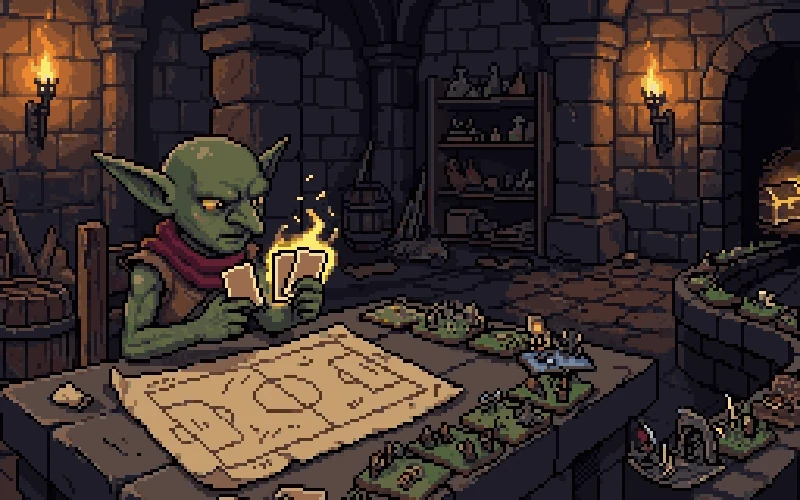
Solo dev mobile card game balancing can get tangled fast. A card that looks weak in one fight may be essential later, while a small enemy change can shift the value of several deck plans. A useful routine starts with the player problem, changes one thing at a time, then checks the result across different builds and points in a run.
Describe the player problem before changing numbers
Start with an observable problem, rather than a number that feels out of place. For example, players may take unavoidable damage in a particular encounter, spend several turns setting up without making progress, or find that one reward choice crowds out the others. Those are different problems, even if they all show up as a fight that feels rough.
Write the problem as a short cause-and-effect statement. 'The enemy's opening attack deals too much damage when the player draws a defensive hand' gives you something to investigate. 'This fight is unfair' does not yet tell you whether to adjust the attack, the player's available answers, or the encounter's timing.
Separate the symptom from your first proposed fix. If a card is rarely picked, the cause could be its cost, its effect, its timing, or a mismatch with the rewards around it. Making it stronger immediately may hide the issue while creating a new one elsewhere.
It helps to connect a combat concern to the decision the player is making. Are they choosing between defense and damage with too little information? Does a required setup turn leave them exposed? Is a strategic option technically available but too unreliable to plan around? If you want a framework for judging individual cards, card evaluation in a roguelike deckbuilder is a useful companion.
Solo dev mobile card game balancing: test one change at a time
Once the problem is specific, make the smallest change that could address it. If you adjust an enemy attack, a reward rate, and a card cost together, you may see a better result but have no clear explanation for it. A narrow test gives you a stronger read on cause and effect.
Before changing anything, write down what you expect to happen. For instance, lowering an attack might give a slow deck enough room to reach its plan. It could also make the encounter trivial for a deck that already handles that enemy well. The prediction does not need to be right; its job is to make the test meaningful.
Keep a simple record of the version, the change, the intended benefit, and the possible downside. Then compare the same kinds of situations before and after. In a card battler, useful observations include how many turns an encounter lasts, whether the player has a meaningful choice on the dangerous turn, and whether the fight asks for a reasonable mix of damage and defense.
Change one variable per test when you can. If an isolated change does not solve the stated problem, revert it or revise the diagnosis before stacking another adjustment on top. Small steps are easier to review, and they reduce the chance that a balance pass turns into guesswork.
Check whether more than one deck plan benefits
A change that helps one strategy can accidentally become a tax on every other strategy. So consider a small set of distinct deck plans when checking an adjustment. For example, compare a plan that deals steady damage, one that needs time to build its output, and one that depends on controlling incoming damage. You are looking for trade-offs, not identical results.
Ask what each plan needs from the encounter. A long fight may give a scaling strategy room to work, while adding more incoming pressure can punish a defensive plan that spends turns setting up. A stronger reward may seem attractive to a deck missing a key tool, yet become an automatic pick for a deck that already uses it well.
This is where a change's indirect effects matter. Increasing enemy health can make damage-over-time effects more valuable and make short-lived bonuses less effective. Adding a defensive option can lower the cost of taking a risky route. Think in terms of who gains access to a new choice and who loses one.
You do not need every deck plan to perform equally in every fight. Each can have favorable and awkward matchups. The important check is whether a strategy has some way to respond, and whether the encounter still gives players room to make decisions. A guide to building synergies in roguelike deckbuilders covers how individual card choices can support a coherent plan.
Look for difficulty shifts across a long run
A balance change rarely lives in one isolated battle. In a run-based deckbuilder, players collect cards and other resources over time, and their ability to handle a challenge changes along with them. A fight that checks early deck basics may feel very different after several rewards have shaped the player's strategy.
Check a change at more than one point in progression. Early encounters can reveal whether players have enough tools to get started. Middle encounters can show whether their developing plans have a fair chance to come together. Later encounters test whether a strategy that worked earlier still has useful decisions to make.
Pay attention to the surrounding sequence as well as the target encounter. A demanding fight after a low-pressure stretch may be a deliberate challenge. The same fight after several resource-draining encounters can create a much sharper difficulty spike. Route choices, recovery opportunities, and rewards all affect how much pressure players carry forward.
When a difficulty jump seems sudden, look at the player's options before increasing or lowering a number. Perhaps the encounter arrives before a deck can reasonably support a particular answer. Perhaps players have a way to respond, but its value is hard to recognize. Reading difficulty spikes in a roguelike deckbuilder offers more ways to examine encounter patterns and run context.
For mobile games, keep the test notes easy to scan. A concise table or checklist can record the build, the encounter, the deck plan being considered, and the outcome. That makes it easier to return to an adjustment later without relying on memory, especially when several parts of the game are being tuned.
Turn balance feedback into a repeatable routine
A practical solo developer card game balance loop can stay compact. State the player problem in concrete terms. Propose one small change and write down what you expect it to improve. Check that change against multiple deck plans and more than one point in progression. Then keep, revise, or revert it based on what the test shows.
When feedback arrives, treat it as a clue to investigate. Different players may describe the same issue in different ways, and one person's preferred strategy may not represent every reasonable approach. Look for the decision or encounter behind the complaint, then check whether your current explanation fits the evidence you can gather.
It is also fine to leave a change alone when the cause remains unclear. More testing or a sharper problem statement can be more useful than a quick patch. Balance work gets easier to discuss when the question is specific, such as whether a player has time to build a plan before the next major threat.
This routine keeps balancing a mobile deckbuilding game focused on player choices. Numbers still matter, but they are most useful when they help explain why a choice feels too weak, too dominant, or too hard to make. A small, well-understood adjustment gives you a cleaner starting point for the next pass.
I make Tower Trials, a dark-fantasy roguelike deckbuilder for iOS and Android where Nibs climbs a 100-floor dwarven tower. Its five archetypes are Miner, Tinker, Brewer, Runes, and Wall, and the game is free with one optional purchase to remove ads.
Play Tower Trials today on mobile