How to Beat Roguelike Deckbuilder Bosses
5 min read
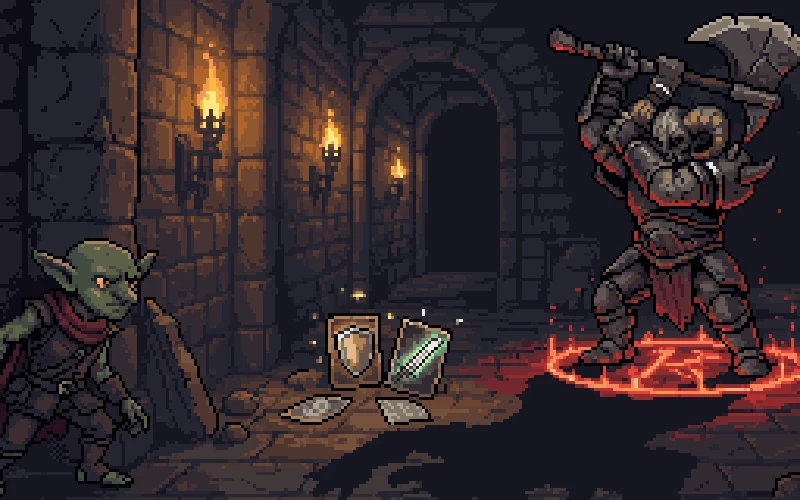
How to beat roguelike deckbuilder bosses comes down to making a useful decision each turn with the information the fight gives you. Read the next threat, estimate how long your plan needs, and spend cards on the action that keeps that plan alive. A boss can look like a test of raw damage, but the hand in front of you and the attack coming next matter just as much.
Read the boss’s first turns before committing to a plan
Start by checking what the boss is preparing to do. Is the next turn an attack, a defensive move, a summon, or some other effect? The exact possibilities depend on the game, so use its visible intent and any known pattern rather than assuming every boss follows the same script.
The opening turn is useful information. If the boss shows a heavy attack, you know your first decision has an immediate survival cost. If it spends a turn setting up, that may give you room to build damage or improve your position. Keep that as a provisional read, though. Bosses can change their behavior at health thresholds or after a particular action.
Before playing a card, ask two quick questions: what happens if I ignore this intent, and what do I gain by acting now? This keeps you from spending a whole turn on a combo that leaves you exposed to a lethal hit, or blocking so much that the fight drags on unnecessarily. For broader run preparation, see this boss preparation checklist.
Identify the fight’s damage clock
The damage clock is your estimate of how many turns you can safely spend before the boss's pressure becomes unmanageable. It is not a precise calculation. It is a practical check on whether your deck's plan can come online in time.
Look at three things: your current health, the damage you can prevent or recover from, and how much damage your deck can deliver on an ordinary turn. Then account for setup. A deck that needs several turns to establish a scaling effect has a different clock from one that can deal strong damage immediately. If the boss applies a growing threat, adds enemies, or disrupts your hand, your safe window may be shorter than its health bar suggests.
Compare your expected damage with the time available. If you can plausibly finish before the boss's pressure overwhelms you, preserve enough health and resources to reach that point. If your damage is slow, prioritize the defenses or control tools that buy those extra turns. A useful card choice depends on the coming fight as much as its printed effect, so this card evaluation guide can help frame the tradeoff.
Choose when to block and when to race
Blocking and racing are both ways to manage risk. Blocking reduces the cost of the next enemy turn. Racing accepts some damage in exchange for ending the fight sooner. The right choice changes with your health, your hand, and the boss's remaining health.
A good default is to cover damage that could end the run or sharply reduce your options next turn. If the incoming hit is survivable and your attacks can shorten the fight substantially, taking some damage may be reasonable. The key is to compare the health you spend with the turn you save. A small block that leaves you in danger can be less useful than finishing a threat, while a large attack can be a poor use of the turn if you will be unable to survive the response.
Pay attention to defense that also advances your plan. Some cards protect you while drawing, weakening an enemy, or supporting later damage. These can make a turn efficient, but do not count on a future payoff if the current threat is urgent. When choosing between boss damage and defense, ask whether the damage prevents a worse future turn or only makes the health bar look reassuringly smaller.
Adjust your cards when the pattern changes
A boss pattern is a guide for decisions, not a promise that every turn will repeat. Reassess when the boss changes stance, reaches a health threshold, summons a new threat, or displays an unfamiliar intent. A plan that worked for the opening may need to change once the fight enters a new phase.
Keep track of what your deck can do on the next draw. If you spend a key defensive card now, will another answer be available before the next major attack? If you use your strongest damage too early, will the boss have time to recover or create a more dangerous situation? These are especially important when your deck depends on drawing specific pieces together.
Also consider the order of your plays. A draw effect may reveal a defense you can use this turn. A debuff might reduce the attack you are about to face. A setup card may be worth playing before damage if it improves every later turn, but only when the immediate cost is safe. Good deck consistency makes these decisions easier because more hands contain useful options, but even a strong deck can draw awkwardly. Make the best of the hand you have.
How to beat roguelike deckbuilder bosses: a turn-by-turn example
Imagine a boss that opens with a visible attack, then alternates between a lighter turn and a setup action. Your first hand contains a block, a modest attack, and a card that improves damage over time. Start by checking whether the opening hit is dangerous at your current health. If it is, play enough defense to remain safe, then use any spare action to chip away or set up. If it is manageable and your attack makes a meaningful difference to the clock, take the damage and advance your plan.
On the lighter turn, look for a chance to establish the scaling effect. The boss's setup action is a warning that the following turn may be more demanding, so avoid treating the quiet turn as free time. If the setup creates a lasting threat, spend the turn improving your position or reducing that threat. If it simply precedes a known attack, prepare the defense you need for that attack.
When the pattern changes, stop following the old rhythm automatically. Recheck intent, estimate the new damage clock, and decide whether the next turn calls for a block, a finish, or setup. This is the core of roguelike boss fight strategy: make a forecast, take the best available action, then update the forecast as new information appears. In games with a regular boss cadence, use the encounters as checkpoints for the whole run. Ask whether your deck can handle a demanding attack, sustain a longer fight, and still draw useful cards under pressure.
Tower Trials is a dark-fantasy roguelike deckbuilder for iOS and Android, with five archetypes: Miner, Tinker, Brewer, Runes, and Wall. It is free to play with one optional purchase to remove ads; learn about Tower Trials.
Play Tower Trials today on mobile