Card Removal Timing in a Deckbuilder: A Practical Decision Tree
7 min read
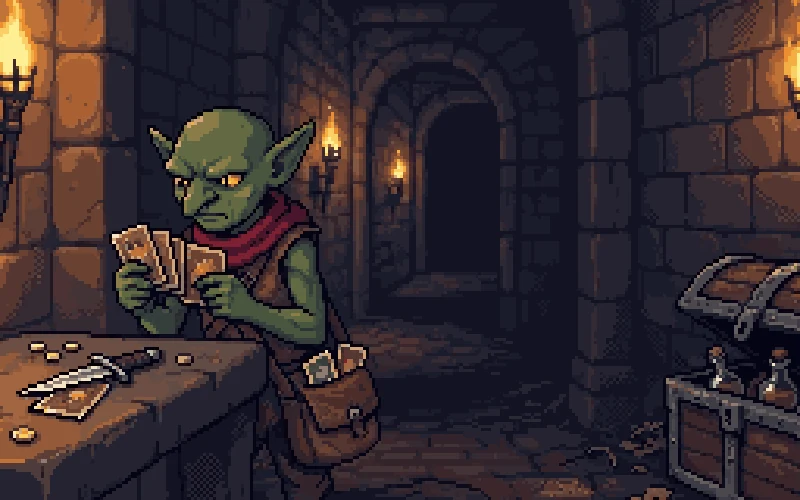
Card removal can make a deck feel sharper, but it also costs an opportunity: the same resource might buy a useful card, improve another part of your run, or simply stay available for later. When to remove cards in a deckbuilder comes down to a few practical questions: how often does the card get in your way, what job does it still do, and what will you give up to remove it? Here's a decision tree you can use before spending.
What card removal actually improves
Removing a card makes the remaining cards a larger share of each shuffle. That can help you see a key card more often, especially if your deck cycles several times during a fight. It can also reduce hands filled with cards that are weak in the situations you face now. The benefit is about access and turn quality, rather than a direct increase in damage or defense.
The effect depends on the size and shape of your deck. Taking one card out of a compact deck can change what you draw noticeably. In a much larger deck, the same removal may barely affect the next shuffle. And if your deck already has several cards that fill the same role, cutting one may not make your central plan much more reliable.
A useful test is to ask what you expect to see more often after the removal. If the answer is a specific card or a useful combination, removal has a clear purpose. If the answer is only 'better draws,' look at your deck's roles first. This deck thinning strategy guide covers how to spot bloat and decide whether a card is actually taking up space you need.
- Removal tends to matter more when the deck is small or the removed card is especially disruptive.
- It matters less when the deck is large, the card is rarely drawn, or several other cards serve the same function.
- Name the draw or turn you hope to improve before you pay for the change.
Card removal timing in a deckbuilder: when a starter card changes your draws
Starter cards are common removal targets because they can be less effective than later rewards. But a starter card can still be doing useful work. A basic attack might be your dependable way to finish a low-health enemy, while a simple defensive card may cover turns when stronger options are not in hand. Removing a card without checking its job can leave a hole that your newer cards do not fill.
Think about the card's frequency and its cost to your turns. Does it appear repeatedly in hands where you need a stronger answer? Does playing it consume a resource you would rather spend elsewhere? Or does it give you an efficient option when your more specialized cards are unavailable? A card that is plain can still be valuable if it is dependable and cheap to use.
Timing matters too. Early in a run, you have more future fights in which a thinner deck might help, but the card may still be carrying a basic role while your rewards are limited. Later on, you can judge it against a more complete plan, though there may be fewer opportunities to benefit from the removal. The right moment is when the likely improvement across upcoming fights is worth the resource spent now.
- Remove a starter when it repeatedly competes with more useful draws and its role is already covered.
- Keep it if you still rely on it for ordinary damage, defense, or another essential task.
- Reassess after new rewards change the deck, rather than treating an early judgment as permanent.
When to keep a card that looks weak
A card's value is relative to the rest of the deck and the fights ahead. A slow setup card can look unimpressive in a short encounter and still pay off in a longer one. A narrow answer may sit awkwardly in ordinary fights but become important against a specific threat. The question is not simply whether the card is strong in isolation. Ask whether your deck needs the job it performs.
Look for role coverage. If removing a defensive card leaves you with no reliable way to protect a vulnerable turn, the extra chance to draw an attack might not be worth it. If a card helps start a combo but has little use afterward, its value depends on how often you can reach the pieces that make it worthwhile. A card can also be a reasonable backup when your primary plan does not come together.
This is where the deckbuilder card removal decision overlaps with card evaluation. Compare a card's cost, immediate impact, and fit with your plan, then consider what threats are coming. A card evaluation quick test can help separate 'weak on its own' from 'wrong for this deck.'
- Keep a card when it covers a role your deck still needs.
- Consider removal when its role is redundant or the card regularly clogs a hand.
- Include upcoming encounters in the judgment, especially if the card answers a specific threat.
Removal versus adding a stronger card
Adding a strong card and removing a weak one solve different problems. A new card can give your deck a capability it lacks, such as dependable defense or a way to build toward larger effects. Removal improves the odds of drawing what is already there. If your deck is missing an important answer, adding that answer may help more than thinning the deck around a plan that is not ready.
If the deck already has the tools it needs but draws them inconsistently, removal becomes more attractive. The two choices can also affect one another. A powerful addition raises the average quality of the deck, yet it also makes the deck larger and can make key cards less frequent. That is fine when the new card earns its place. It is less appealing when the card is only a small upgrade over something you already have.
Compare the likely next few fights. If you need a new role to survive them, prioritize the role. If your deck's roles are covered and weak draws keep disrupting your turns, consider removal. If neither choice is urgent, saving the resource can preserve options for a later reward or a more pressing need.
- Add a card when it fills a clear gap in the deck.
- Remove a card when your plan works but draws are diluted by low-value or redundant cards.
- Save resources when the immediate benefit is small and a more important decision is likely soon.
A quick check before spending at a shop
Before paying for removal, take a moment to state the problem in one sentence. For example, 'I keep drawing this card instead of the defense I need,' or 'This card costs too much for the role it fills.' A specific problem makes it easier to tell whether removal solves it. If you cannot name the problem, a different purchase or waiting may be wiser.
Then check the opportunity cost. What can the same resource buy, and how soon will you need to make another decision? A card removal option may be limited, or its cost may be meaningful in the game you are playing, so compare the actual choices in front of you rather than following a fixed rule. There is no universal number of cards that should be removed from every deck.
Finally, check what remains after the cut. Can the deck still deal enough damage, defend through difficult turns, and use its main synergies? If the answer is yes, and the card has been causing a recurring problem, removal is easier to justify. For a broader look at how deck size affects cycling and access to key cards, see how many cards a deckbuilder deck should have.
A compact decision tree looks like this: first, identify a repeated draw problem. Next, check whether the card has a role your deck still needs. If it does, keep it or find another way to cover that role. If it does not, compare removal with the best alternative purchase. Spend when the expected improvement to upcoming turns is clearer than what you would gain by waiting.
- What specific draw or turn should improve?
- Does this card still fill an important role?
- What is the strongest alternative use of the resource?
- Will the deck remain functional after the removal?
Tower Trials is a dark-fantasy roguelike deckbuilder for iOS and Android, with five archetypes: Miner, Tinker, Brewer, Runes, and Wall. It is free to play with one optional purchase to remove ads; you can read more on the Tower Trials homepage.
Play Tower Trials today on mobile