Roguelike Deckbuilder Run Planning: Think One Step Ahead
6 min read
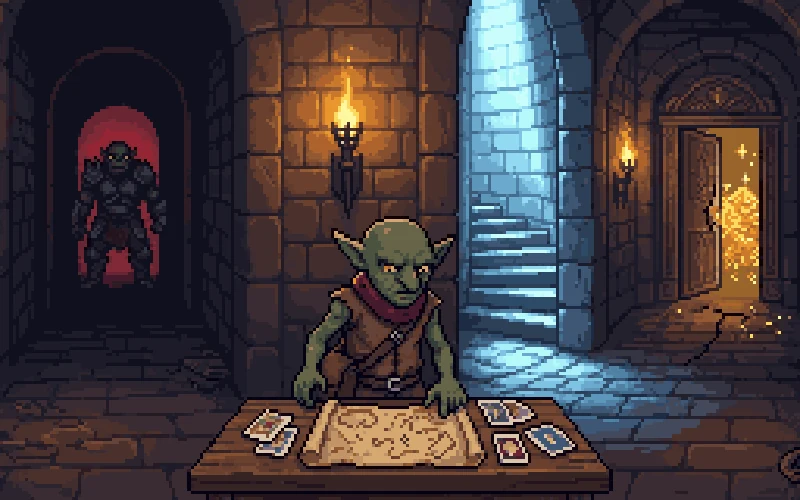
Roguelike deckbuilder run planning gets easier when you think in short stretches. A useful plan can connect your next card reward to the fights ahead, while leaving room for the map or a surprise encounter to change your priorities.
Set a short-term goal for the next few rooms
A run is too unpredictable to script from the opening screen. Instead, pick a goal that covers the next few rooms, then check whether it still makes sense after each reward. A short horizon keeps decisions focused without asking you to predict every card and encounter you will see.
Start with a simple question: what is most likely to put this run in trouble soon? Maybe your deck deals enough damage but struggles to defend. Maybe it handles ordinary fights well and lacks a way to finish a long boss encounter. You can then use that weakness as a temporary priority for card choices and route decisions.
Keep the goal concrete. 'Improve the deck' gives you little to act on. 'Find a way to avoid taking repeated damage in multi-enemy fights' gives you a standard for judging both a card and the next branch. You can still take a strong reward that serves a different purpose, but you will know what tradeoff you are making.
A route plan should include your current condition, too. Low health can make a safer path more valuable, while a healthy run may have room to consider a riskier encounter. Think about the next recovery opportunity and the fight after it, rather than treating each map node as a separate choice. This map pathing guide has more on weighing route options.
Roguelike deckbuilder run planning needs a backup
A good plan has a primary need and a fallback. If you are hoping to add scaling damage, decide what you will do if the next few rewards offer none. Perhaps you prioritize efficient attacks for the immediate fights, or choose a defensive option that buys time for your current damage to work. The backup keeps a missing reward from turning into a string of desperate picks.
This matters because card rewards are uncertain. A card that supports your intended direction may never appear, and a reward can be useful without fitting a neat combo. Keep a distinction between a card that solves an immediate problem and one that strengthens a longer-term plan. Both can be worth taking, but they answer different questions.
Before choosing, ask what happens if the card you want never arrives. If your answer is 'the run cannot function,' your plan may be too dependent on a specific piece. Look for overlapping ways to solve the same problem, such as reliable damage plus a defensive tool, rather than waiting for one exact card to rescue the deck.
You can apply the same thinking to the map. If one route depends on reaching a particular kind of reward, identify another branch that leaves you in workable shape. Route flexibility has value because a run can offer a fight, reward, or risk that changes what you need.
Connect card picks to likely threats
Card value depends on the fights your deck needs to handle. A slow scaling card may be excellent when you have time to build an advantage, and awkward when the next encounter demands immediate damage. A defensive card can look modest in isolation and become important when your route points toward several demanding fights in a row.
For each reward, name the problem it addresses. Does it improve your first turns, help against multiple enemies, increase damage over a longer fight, or make your deck more consistent? Then consider whether that problem is likely to appear before you can find another answer. This turns card evaluation into a practical question about timing and fit, rather than a hunt for cards that look powerful on their own.
Look at the deck's current shape as well. If your key cards are hard to draw together, another synergy piece may not help as much as a broadly useful card. If you already have a dependable core, a more specialized pick could give it a stronger payoff. The card evaluation guide offers a repeatable way to compare immediate value, cost, and deck fit.
Boss preparation deserves a place in this check, even when the boss is several rooms away. You do not need to draft a perfect answer early. Instead, notice which parts of your deck may struggle and take reasonable opportunities to shore them up. As the encounter gets closer, switch from broad improvement to the specific demands you can anticipate.
Know when to change your plan
Plans should update when the evidence changes. A reward that fills an unexpected gap may make your old priority less urgent. A costly fight can push survival ahead of damage scaling. A new route can also reveal that a card you passed earlier would have mattered more than expected. Treat these moments as information for the next decision, rather than proof that the whole run has gone wrong.
One useful checkpoint is after every major reward or route choice. Ask three quick questions: what did I gain, what is the next likely threat, and what is now my weakest area? The answers may confirm your current direction. They may also tell you to stop chasing a combo and draft for basic coverage.
Changing direction does not mean abandoning everything you already drafted. Cards have value across multiple situations, and a partial plan can still provide a foundation. Look for picks that overlap with your current tools. An attack that helps now and supports a later damage plan can be easier to justify than a narrow card that only pays off if several future rewards appear.
If you want a more detailed look at evaluating difficulty and encounter signals, see how to read difficulty spikes. The key is to make changes while you still have choices. Waiting until a weakness has caused several bad fights can leave fewer ways to correct it.
Use branching routes as planning checkpoints
A branching map makes planning visible. Each fork asks you to compare what you need with what the route may offer. A path with more fights could help a deck that needs rewards, while a route with less immediate pressure might preserve health for a looming boss. The right choice depends on both your current state and the next problem you expect to face.
Try planning only to the next meaningful checkpoint. For example, you might choose a route that gives you a chance to improve the deck before a boss, then reconsider after seeing the reward. If your deck finds a strong answer, the next fork can be judged on its own. If the reward misses, you can favor a safer branch or another opportunity to strengthen a weak area.
This approach avoids two common traps. One is choosing the same type of route every time, even when your health and deck have changed. The other is making each fork in isolation, with no thought for what comes after it. A short route plan connects those decisions while staying easy to revise.
A branching floor can act like a series of small commitments. Choose a direction, check the result, then decide whether the original goal still fits. That rhythm works in many run-based deckbuilders, whether their maps use named rooms, paths, or a sequence of encounters. Your plan stays useful because it guides the next decision, rather than trying to control the entire run.
I made Tower Trials, a dark-fantasy roguelike deckbuilder for iOS and Android where a goblin climbs a 100-floor dwarven tower. Its five archetypes are Miner, Tinker, Brewer, Runes, and Wall, and the game is free with one optional purchase to remove ads.
Play Tower Trials today on mobile