How to Scale Damage in Deckbuilders Without Falling Behind
5 min read
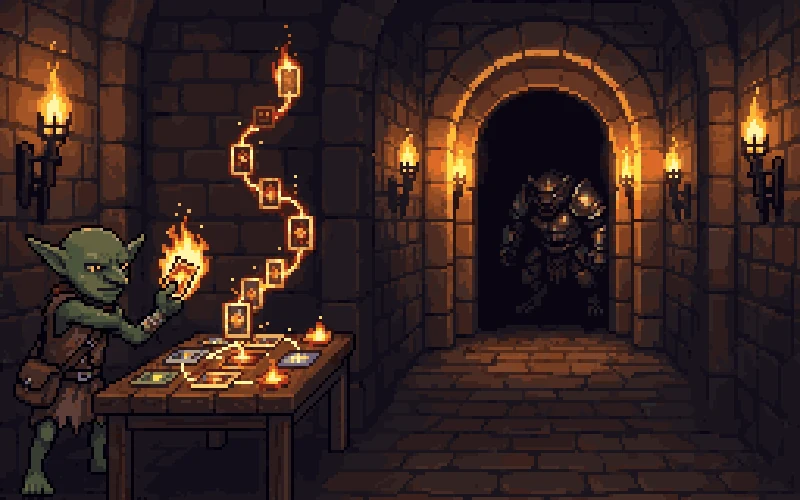
Scaling damage in deckbuilders means investing now so your attacks become more effective over later turns. The tricky part is surviving long enough to collect that payoff. A useful plan starts with three questions: how long is this fight likely to last, how many turns does your engine need, and what can you do while it comes online?
Scaling damage versus front-loaded damage
Front-loaded damage pays off immediately. It helps remove a dangerous enemy before it acts again, and it can end a short encounter before slower plans matter. Scaling damage takes setup, then improves your output over multiple turns. Think of a one-time attack boost, a repeating damage effect, or a combo that gets stronger as you play more pieces.
The difference is easiest to see through a rough break-even check. Suppose a scaling card costs one turn and adds a small amount of damage to each later turn. Compare its total contribution over the likely fight length with the damage you could have dealt immediately instead. If the fight ends before the added damage catches up, the setup was a poor fit for that encounter. If the fight goes on, each extra turn can make the investment more valuable.
This is why damage scaling versus burst is not a choice you make once for an entire run. Burst handles immediate threats. Scaling gives you a way to keep pace when an enemy has enough health to outlast your opening attacks. Most decks need some of each, though the balance can shift depending on the opponents ahead.
- Burst answers, 'Can I solve this threat now?'
- Scaling answers, 'Can I keep dealing enough damage later?'
How to scale damage in deckbuilders by estimating setup turns
Before adding another setup card, estimate its payback window. Count the turns before it contributes damage, then count how many useful turns are likely to remain. Include the turn spent drawing or playing the setup card, and remember that a card in your hand does nothing until you can afford to use it.
For example, imagine a fight that usually lasts four turns. Your scaling effect takes one turn to play and starts contributing on the next turn. That leaves only a few turns of payoff. A direct attack may be a better pick if it prevents incoming damage or finishes an enemy sooner. In a longer boss fight, the same setup can contribute for many more turns, so its value rises.
There is no need to calculate every point precisely. Use a simple comparison: immediate damage you give up versus extra damage gained over the expected remaining turns. Then adjust for survival. A scaling effect that theoretically wins later can still be a bad choice if playing it leaves you exposed to a dangerous attack now.
Also check whether the effect needs support. A card that scales only when another condition is met may need additional draws or setup pieces. That makes its real setup time longer than the text on one card suggests. For a closer look at identifying what a card contributes, see this card evaluation guide.
Match your damage plan to the next fight
Use the upcoming fight, rather than your favorite combo, as the first filter for damage choices. A group of low-health enemies often rewards immediate attacks because removing one opponent can reduce the pressure you face. A single durable enemy usually gives scaling more time to pay off. These are tendencies, not guarantees, so look at enemy behavior and your current health as well.
Next, check what your deck can do during setup. Can you defend while you play the scaling card? Does the effect deal damage on its own, or does it need another card to make it useful? Can your draw reliably find the pieces before the fight turns against you? An engine that works only when every piece arrives on time is much less dependable than one with overlapping routes to damage.
A practical pre-fight check is to write down three things mentally: the threat you need to answer first, the number of turns you expect to have, and the setup you can afford without taking too much damage. If the first threat is urgent, prioritize the response. If you have room to build, commit to a plan that remains useful after the opening turns. The boss preparation checklist uses a similar habit of checking your tools against the next major fight.
Keep early burst while building for bosses
A deck built only for the first few turns can run out of answers against a large health pool. A deck built only for late-game scaling can lose health or fail before its engine starts. Keep a small core of attacks that have useful immediate impact, then add scaling that improves the turns that follow.
When choosing between two rewards, consider overlap. A card that deals decent damage now and benefits from your scaling plan can cover both jobs. A pure setup card may still be worth taking, but ask whether you already have enough ways to survive its setup turn. If not, another attack or a defensive tool may help the deck reach the turns where its engine pays off.
This is also where deck consistency matters. If the key scaling pieces are buried among cards that do little for the current fight, the theoretical damage ceiling will not help much. You can read more about making important cards show up reliably in this deck consistency guide.
Common scaling mistakes to catch
The first common mistake is judging a scaling card by its maximum payoff. Ask how often you will get to use it, and how many turns it needs before it beats a direct option. A high ceiling matters less when the fight ends early or the card appears too late.
Another mistake is taking several setup pieces without checking the opening turns. Each one can compete for the same energy, hand space, or chance to act. If they all need to be played before your deck deals meaningful damage, you may have created a slow opening rather than a stronger engine. Add setup gradually and check whether the cards work together in the fights you actually face.
Finally, do not assume every long fight is a reason to scale. If an enemy becomes more dangerous over time, ending the fight sooner can matter more than reaching a large damage total later. Likewise, if you are low on health, a setup turn that takes a hit may cost more than its future damage is worth. Scaling damage in long fights works when you can survive the wait and keep converting later turns into value.
Tower Trials is a dark-fantasy roguelike deckbuilder for mobile, with five archetypes: Miner, Tinker, Brewer, Runes, and Wall. It's free to play, with one optional purchase to remove ads, and you can find it at Tower Trials.
Play Tower Trials today on mobile